
 EN
EN AR
AR
 DA
DA
 NL
NL
 FR
FR
 DE
DE
 EL
EL
 HI
HI
 IT
IT
 JA
JA
 KO
KO
 PL
PL
 PT
PT
 RU
RU
 ES
ES
 TL
TL
 ID
ID
 VI
VI
 TH
TH
 TR
TR
 FA
FA
 MS
MS
 KK
KK
 UZ
UZ
 KY
KY

Dans le paysage en constante évolution de l'immobilier commercial et de la sécurité des entreprises, les systèmes traditionnels de serrures et de clés deviennent rapidement obsolètes. Pour les gestionnaires de biens, les promoteurs immobiliers et les responsables des installations corporatives, la priorité n'est plus simplement de maintenir les portes verrouillées, mais bien d'assurer un contrôle d'accès intelligent, évolutif et transparent.
À l'approche de l'avenir des infrastructures de sécurité B2B, les serrures intelligentes biométriques émergent comme la solution ultime pour les projets commerciaux. Voici pourquoi la mise à niveau vers une technologie intelligente d'accès constitue une étape incontournable pour les entreprises modernes.
1. Une sécurité inégalée grâce à la biométrie avancée
Le changement le plus significatif dans le domaine de la sécurité commerciale est la transition vers la biométrie. Des fonctionnalités telles que la reconnaissance faciale 3D et la reconnaissance de la paume de la main offrent un niveau de sécurité que les cartes RFID traditionnelles ou les mots de passe ne peuvent tout simplement pas égaler. Les clés physiques peuvent être copiées, et les badges d’accès peuvent être volés ou perdus, mais les données biométriques sont uniques à chaque individu. Cela garantit que seuls les personnels autorisés peuvent accéder aux zones à haute sécurité, aux salles serveurs ou aux bureaux des cadres supérieurs, réduisant ainsi drastiquement le risque d’intrusions non autorisées.
2. Gestion cloud évolutif pour plusieurs emplacements
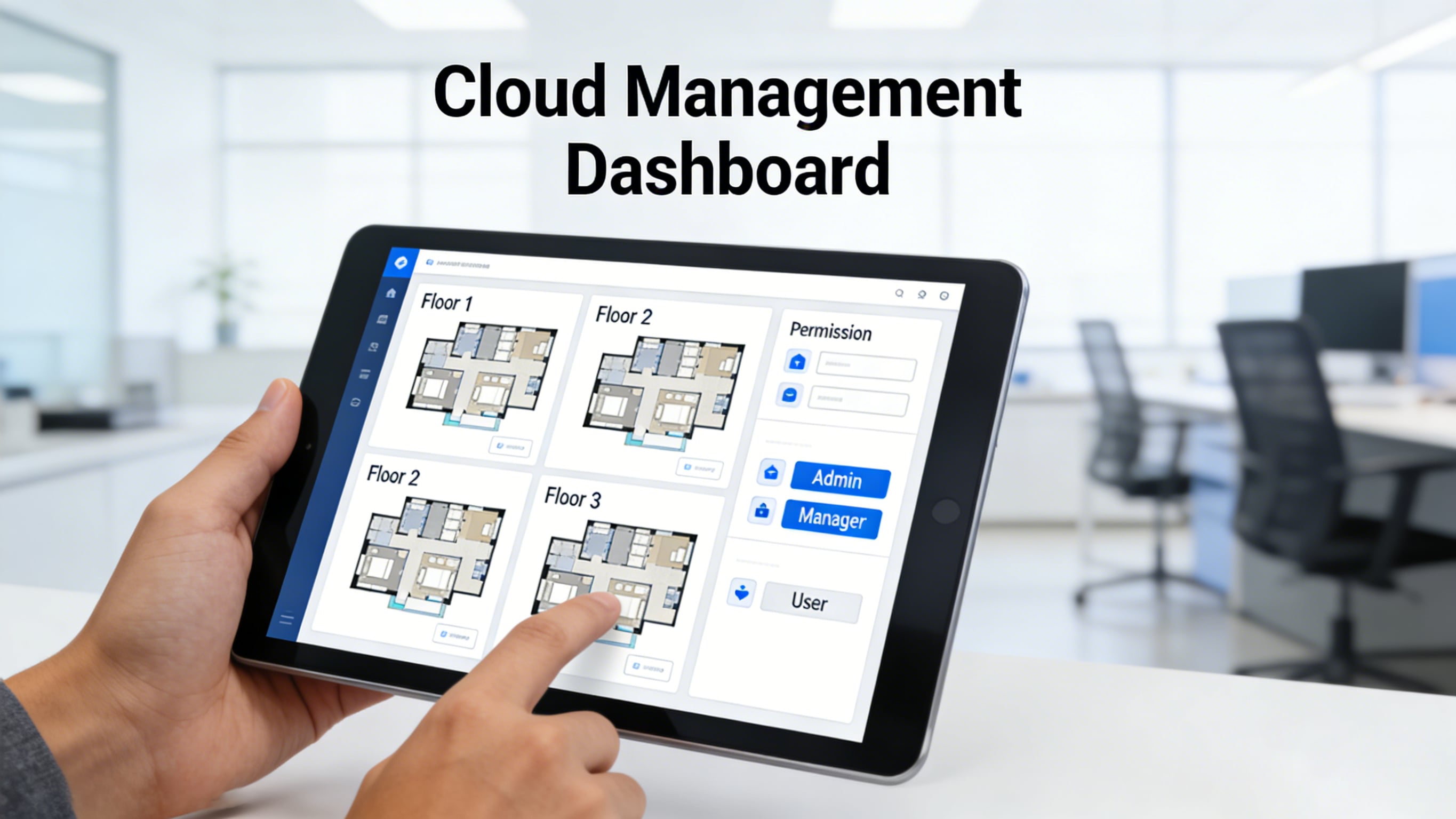
Pour les clients B2B gérant des projets à grande échelle, des hôtels ou des immeubles de bureaux à usage multiple, les serrures hors ligne constituent un cauchemar administratif. Les serrures intelligentes modernes intégrées à des plateformes telles que Tuya ou TTLock permettent aux administrateurs de gérer entièrement les autorisations d’accès depuis le cloud.
Surveillance en temps réel : Suivre précisément qui entre et sort du bâtiment, et à quel moment.
Accès à distance : Accorder des e-clés ou des codes d’accès temporaires à des entrepreneurs, des agents d’entretien ou des invités, sans avoir besoin d’être sur site.
Contrôle centralisé : Gérer des centaines de portes réparties dans différentes villes depuis un seul tableau de bord.
3. Systèmes tout-en-un : interphones vidéo et caméras intelligentes
La sécurité repose autant sur la visibilité que sur la restriction. La dernière génération de serrures intelligentes commerciales intègre des caméras intégrées et des interphones vidéo bidirectionnels. Cette approche « tout-en-un » permet aux réceptionnistes ou au personnel de sécurité de vérifier visuellement les visiteurs via une application smartphone ou un moniteur central avant d’accorder l’accès. Elle regroupe plusieurs composants matériels de sécurité — caméras, sonnettes et serrures — en un seul dispositif élégant et économique.
4. Durabilité sur divers types de portes
Les environnements commerciaux exigent des équipements robustes. Les serrures intelligentes haut de gamme actuelles sont fabriquées à partir de matériaux résistants tels que l’alliage d’aluminium, garantissant des performances étanches et résistantes au vandalisme. En outre, elles sont conçues pour être universellement compatibles avec les divers matériaux utilisés dans les projets commerciaux, s’adaptant parfaitement aux portes en aluminium à cadre étroit, aux portes de sécurité en acier massif et aux portes de bureau standard en bois.
Conclusion
Pour les acheteurs B2B et les intégrateurs de projets, investir dans un système intelligent de contrôle d’accès biométrique n’est plus seulement une amélioration de luxe ; il s’agit désormais d’une exigence fondamentale pour assurer l’efficacité opérationnelle et la protection des actifs. En adoptant des systèmes dotés de reconnaissance faciale 3D, de gestion via application cloud et de surveillance vidéo intégrée, les entreprises peuvent sécuriser leur infrastructure à long terme et offrir une tranquillité d’esprit sans égale.