 EN
EN AR
AR
 DA
DA
 NL
NL
 FR
FR
 DE
DE
 EL
EL
 HI
HI
 IT
IT
 JA
JA
 KO
KO
 PL
PL
 PT
PT
 RU
RU
 ES
ES
 TL
TL
 ID
ID
 VI
VI
 TH
TH
 TR
TR
 FA
FA
 MS
MS
 KK
KK
 UZ
UZ
 KY
KY

Kapag sinusuri ng mga konsyumer ang isang bagong smart lock, ang kanilang atensyon ay halos eksklusibong nakatuon sa mga digital na tampok. Nakakabilib kami sa 3D facial recognition, mabilis na fingerprint sensors, at ang maayos na integrasyon sa mga voice assistant. Gayunpaman, bilang mga propesyonal sa larangan ng seguridad, kailangan nating harapin ang isang malupit na katotohanan: ang isang magnanakaw ay lubhang hindi malamang na umupo sa iyong balkonahe kasama ang laptop upang balewalain ang iyong 256-bit AES encryption. Sa tunay na mundo, ang mga pagnanakaw ay bihira nang sopistikadong cybercrime; ito ay mga brutal, mababang teknolohiya, at mapanggulat na pisikal na pag-atake.
Ang isang pampalaglag ay hindi interesado sa iyong Wi-Fi protocol. Ang isang mabigat na martilyo ay hindi mapipigilan ng isang virtual na password. Kung alisin natin ang mga touchscreen at mga module ng Bluetooth, ang tunay na sukatan ng katiyakan ng isang smart lock ay ang kanyang mekanikal na batayan laban sa pagnanakaw. Upang lubos na mapanatiling ligtas ang iyong tahanan, kailangan mong maunawaan ang pisikal na panlaban na nagpaprotekta sa elektronikong utak nito.
Ang Ilusyon ng Digital na Panlaban: Hindi Pwede Panghihinaan ang Pisikal na Seguridad
Isang mapanganib na maling akala ang tingnan ang isang smart lock nang eksklusibo bilang isang bahagi ng consumer electronics, tulad ng isang smartphone o tablet. Sa pangunahin, ang isang smart lock ay isang mabibigat na mekanikal na device para sa seguridad na kung saan ang operasyon ay ginagawa ng isang microprocessor.
Kung ang pisikal na chasis ng lock ay mahina, ang pinakamahusay na biometric scanner sa buong mundo ay naging walang saysay. Ang mga intruder ay pabor sa bilis at puwersang pisikal—pagpapadulas sa cylinder, pagpapabagsak sa panlabas na panel upang ma-access ang clutch, o pagpapasok ng pry bar sa pagitan ng pinto at katawan ng lock. Kaya naman, ang pangunahing pundasyon ng anumang kredibleng smart lock ay ang kanyang mekanikal na tibay. Ang mga elektronikong tampok ay idinisenyo para sa iyong pang-araw-araw na kaginhawahan; ang integridad ng mekanikal ay idinisenyo para sa iyong panghuling kaligtasan.
Aktibong Depensa: Pag-aadjust ng Sensibilidad ng Alarm Laban sa Pagpapalag
Kahit na may matibay na pisikal na istruktura, ang pagpigil sa isang pag-atake bago pa man mangyari ang isang breach ay napakahalaga. Narito kung saan ang mekanikal at digital na mundo ay kumikilos nang perpekto nang sabay-sabay sa pamamagitan ng Sistema ng Alarm Laban sa Pagpapalag (Laban sa Pagmamaniobra) .
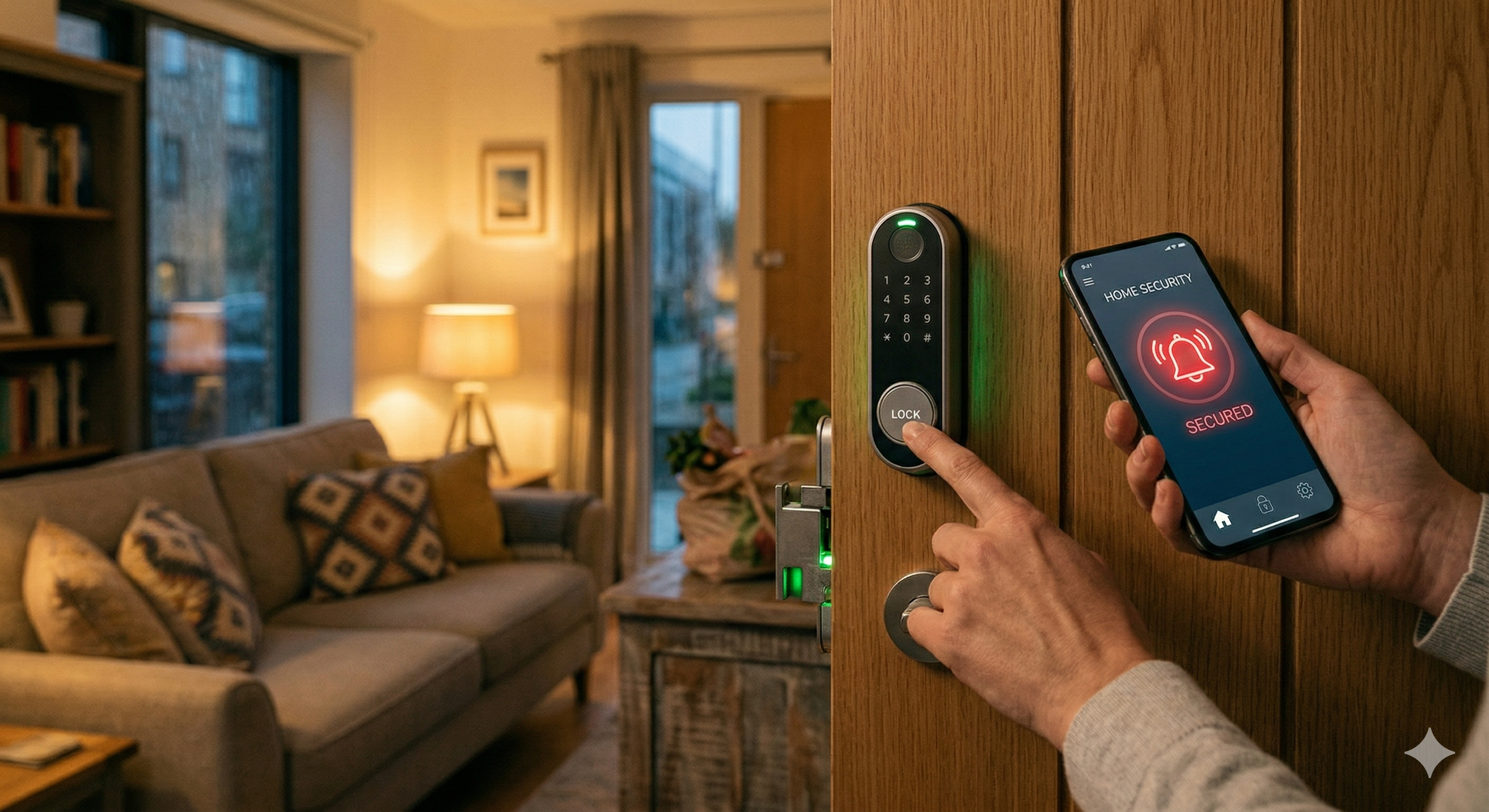
Ang mga premium na smart lock ay dinisenyo na may isang lubhang sensitibong micro-switch o sensor ng tensyon na pisikal na pinipisil sa pagitan ng panlabas na panel ng lock at ng ibabaw ng pinto. Ito ang kritikal na linya ng depensa laban sa pinakakaraniwang gamit na kasangkapan para sa pilit na pagsalakay: ang pry bar.
Ang kalibrasyon ng sensitibidad ng sensor na ito ay isang kahanga-hangang gawa ng eksaktong inhenyeriya. Dapat itong sapat na matatag upang balewalain ang mga vibrations mula sa malakas na pinto kapag ito'y binubuksan nang malakas, ngunit sapat ding sensitibo upang i-trigger ang eksaktong milisegundo kung saan ang isang crowbar ay lumilikha ng mikroskopikong puwang (karaniwang mas mababa sa 2 millimetro) sa pagitan ng lock at ng frame ng pinto. Sa sandaling putulin ang pisikal na koneksyon na ito, ang lock ay agad na pumapasok sa ganap na aktibong mode ng depensa. Agad itong nagpapalabas ng napakalakas na lokal na sirena (madalas na umaabot sa higit sa 100 decibels) na idinisenyo upang magdulot ng panic sa magnanakaw at magpaalala sa mga kapitbahay, habang samantala ay nagpapadala rin ng mataas na priyoridad na SOS push notification sa smartphone ng may-ari ng bahay.
Hinubog para sa Labanan: Ang Anti-Smash na Pagganap ng mga Alloy Panel
Kung ang alarm laban sa pagpapalagay ay ang aktibong pananggalang, ang panlabas na panel ng lock ay ang pasibong kuta. Ang komposisyon ng materyal ng panel na ito ang nagtutukoy kung mananatiling matibay ang lock o mababasag sa ilalim ng matinding pisikal na pagsalakay.
Ang mga budget smart lock ay karaniwang gumagamit ng mga plastik na may pampalakas, manipis na sheet ng aluminum, o mga komposito ng zinc na may mababang densidad upang mabawasan ang gastos sa produksyon. Sa ilalim ng diretsong suntok ng mabigat na martilyo, ang mga madudurog na materyales na ito ay sumisira, na nagbubunyag sa panloob na motor, kable, at mekanismo ng clutch para sa manipulasyon.
Sa kabaligtaran, ang mga propesyonal na smart lock ay ginawa mula sa matitibay at mataas ang densidad na materyales na idinisenyo upang absorbohin at i-reflect ang kinetic energy. Ang gold standard ng industriya ay gumagamit ng Mga Alloy ng Aluminum na Pang-aviation o Mga Komposito ng Zinc-Steel na Mataas ang Densidad . Ang mga materyales na ito ay dumaan sa mahigpit na proseso ng paggawa, kabilang ang CNC machining at high-pressure die-casting, upang likhain ang isang seamless at hindi nababago na monoblock chassis.
Sa panahon ng mahigpit na pagsusuri laban sa kaguluhan sa laboratorio, ang mga panel na gawa sa alloy na ito ay inilalagay sa paulit-ulit at mataas na bilis na pag-impact. Ang isang sumusunod at de-kalidad na panel na gawa sa alloy ay idinisenyo upang magkaroon ng butas o palugit imbes na mabasag, na pinapanatili ang kanyang istruktural na integridad at nag-aaseguro na ang panloob na mekanikal na clutch ay mananatiling lubos na protektado at mahigpit na nakakonekta. Kahit na ang touchscreen ay ganap na napulverize, ang mabigat na chassis na gawa sa alloy ay nagagarantiya na ang deadbolt ay hindi susuko.
Kapag nag-iinvest ka sa isang smart lock, huwag mong hayaang maduling ang iyong paningin ng digital na interface. Hilingin ang hardware na pinalalakas upang tumagal sa matinding katotohanan ng pisikal na pag-atake.
Panatilihin ang Iyong Panlabas na Seguridad gamit ang LaDing
Ang mga smart lock na LaDing ay ginawa mula sa mataas na densidad at aerospace-grade na mga alloy at mayroong ultra-sensitive na anti-pry sensors upang tumagal sa pinakamalupit na pisikal na pag-atake. Huwag ikompromiso ang iyong mekanikal na base; makipag-ugnayan sa aming mga eksperto sa seguridad ngayon sa WhatsApp: +86 15800194932.